

kH/Alkalinity Test Kit - Salifert
kH/Alkalinity Test Kit - Salifert
Couldn't load pickup availability
10 in stock
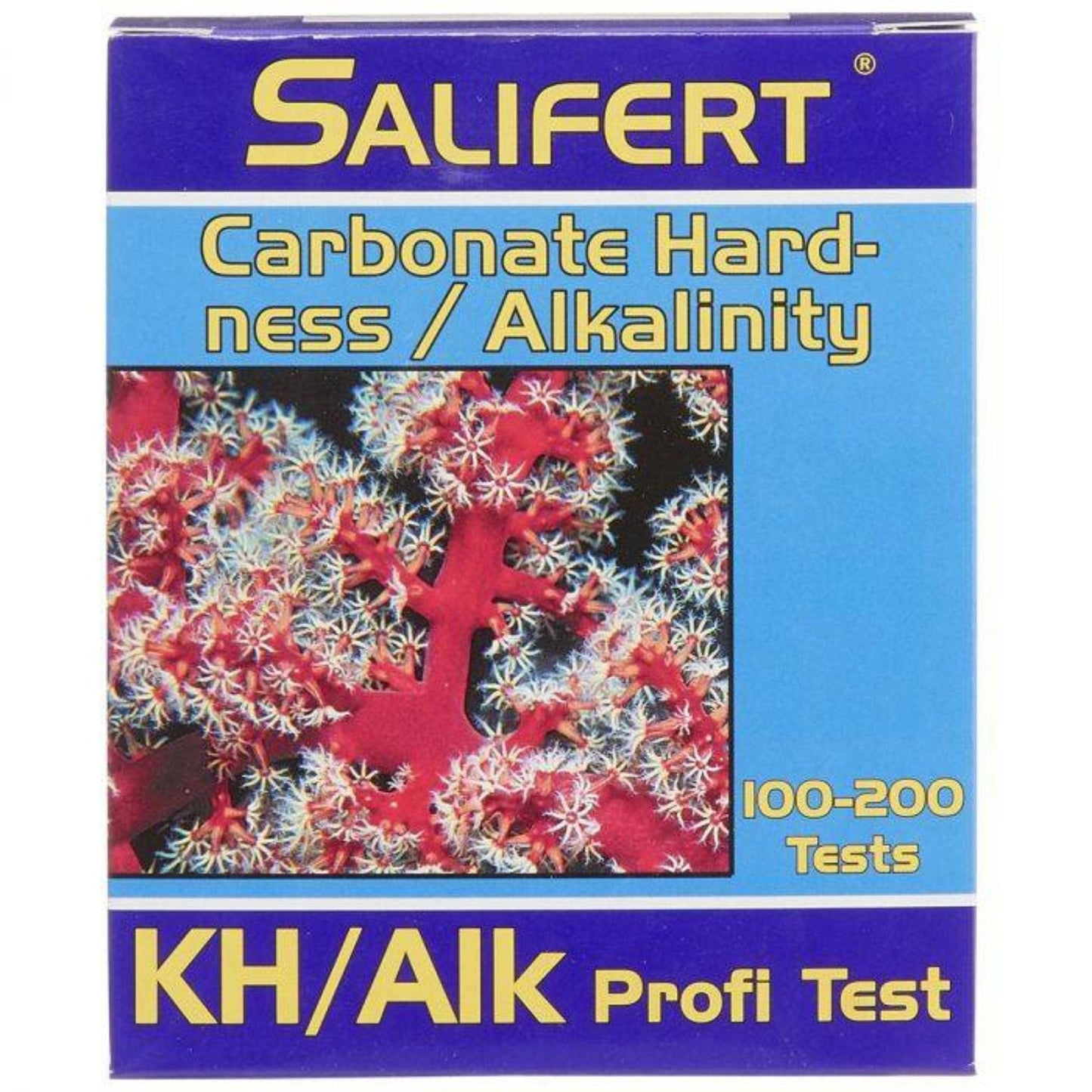
Alkalinity (kH) buffers your pH and feeds coral growth. It can drop quickly in a busy reef tank, which makes it one of the most important things to test. The Salifert kH/Alkalinity Profi-Test is a syringe titration with an easy blue-to-pink end point.
Tests and range
Contains 100-200 tests, typically closer to 100. Using the standard 4 ml sample, the chart reads up to 15.7 dKH. A low-resolution mode with a 2 ml sample doubles the number of tests.
Natural seawater sits around 7-8 dKH (2.5-2.9 meq/L). 1 dKH = 0.357 meq/L.
How to test
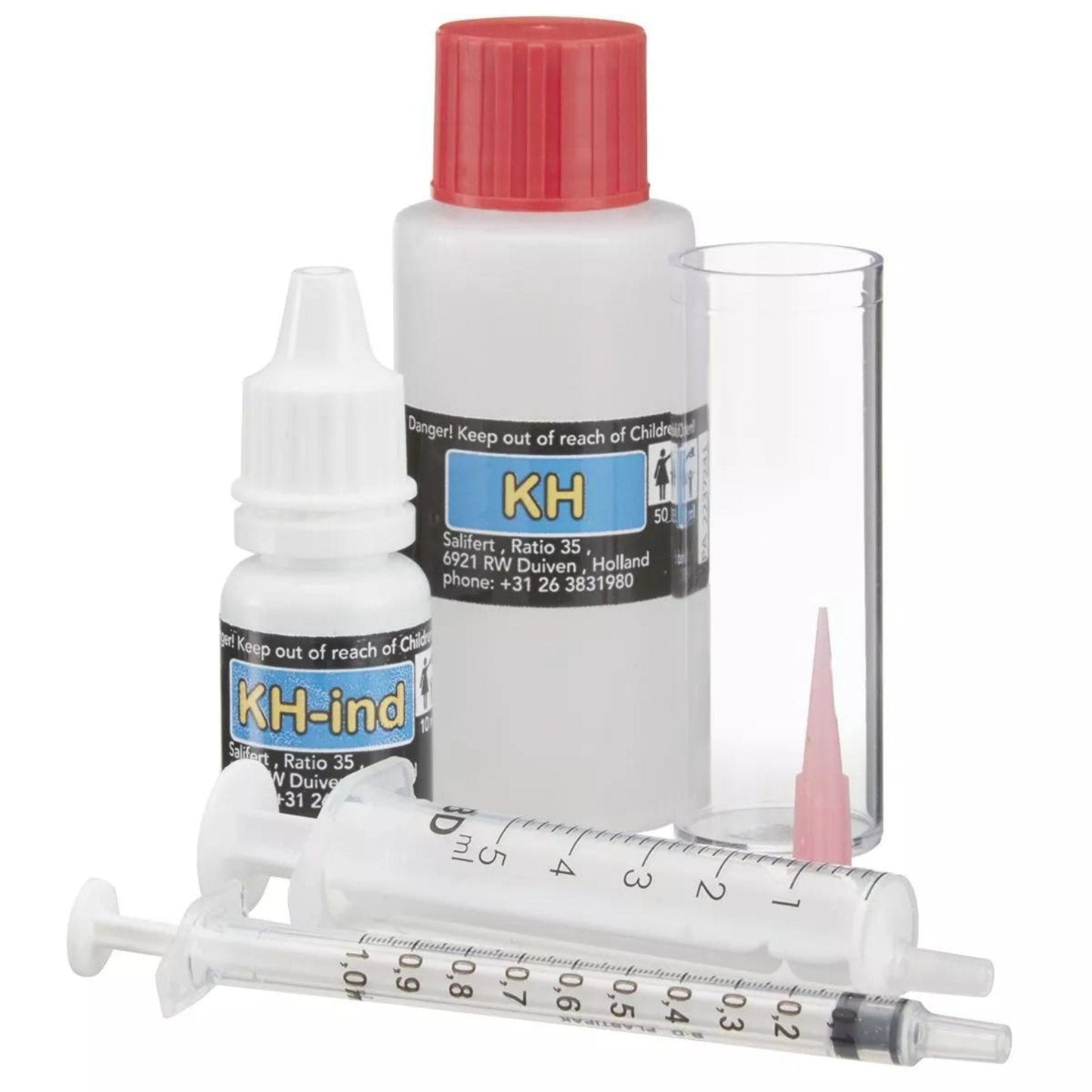
- Use the 5 ml syringe to add 4 ml of tank water to the test vial. For lower resolution and more tests, add 2 ml instead.
- Shake the KH-Ind bottle and add 4 drops to the vial (2 drops in low-resolution mode). Swirl for about 5 seconds.
- Fit the plastic tip to the 1 ml syringe and draw up KH reagent until the lower end of the black piston sits exactly on the 1.00 ml mark. A small air gap between the piston and the tip does not affect the result.
- Add the reagent drop by drop, swirling for a second or two after each drop, until the colour changes from blue/green to orange-red or pink.
- Hold the syringe tip up, read the position of the upper end of the black piston, and look up the kH value in the chart. In low-resolution mode, multiply the result by 2.
Safety: keep out of reach of children and not for consumption. The indicator contains a dye that can stain fabric.
FAQ
How often should I test alkalinity?
Stony coral tanks use alkalinity fast, so many reef keepers test it several times a week, especially when they are setting or adjusting dosing.
What does it measure in, dKH or meq/L?
The chart gives dKH. Divide by 2.8 (or multiply by 0.357) for meq/L.
What else should I test with it?
Calcium and magnesium. See our Calcium and Magnesium kits.
See the full range of Salifert test kits. Dry goods ship Australia-wide.